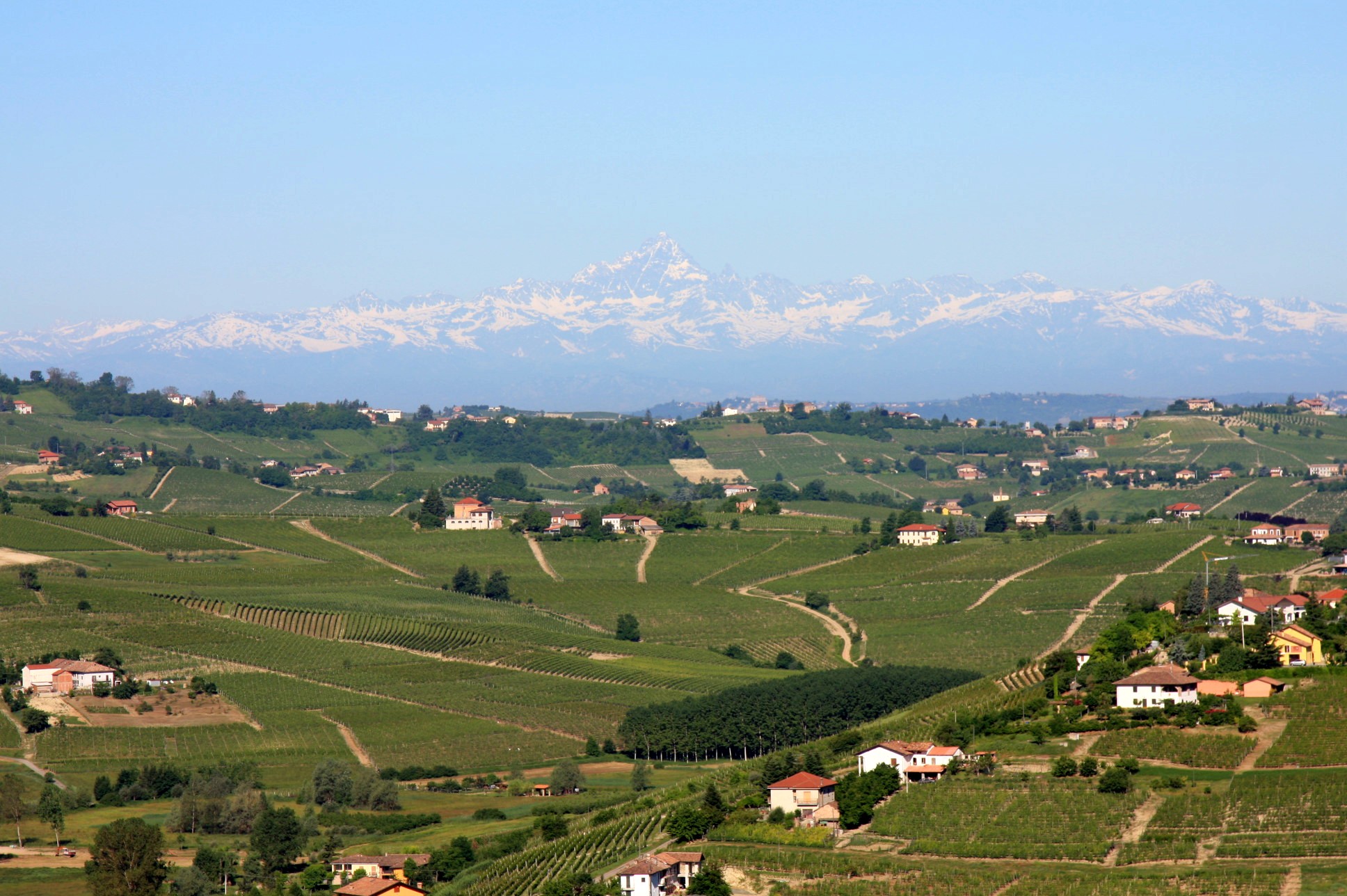
 Il Roero (Roé in piemontese) è una regione geografica del Piemonte, situata nella parte
 nord-orientale della provincia di Cuneo. Prende il nome dalla famiglia omonima – ovvero quella dei Roero – che a partire dal periodo medioevale e per vari secoli ha dominato su questo territorio.
Il territorio al pari delle vicine Langhe è anche nota meta turistica in ambito eno-gastronomico e culturale per i tanti castelli e antichi borghi che costellano il suo piccolo territorio.
Il 22 giugno 2014, durante la 38ª sessione del comitato UNESCO a Doha, il Roero è stato ufficialmente incluso, assieme a Langhe e Monferrato, nella lista dei beni del Patrimonio dell’Umanità.
Info: www.langheroero.it
The Langhe (Langa from old dialect Mons Langa et Bassa Langa) is a hilly area to the south and east of the river Tanaro in the province of Cuneo in Piedmont, northern Italy.
It is famous for its wines, cheeses, and truffles—particularly the white truffles of Alba. The countryside as it was in the first half of the 20th Century features prominently in the writings of Beppe Fenoglio and Cesare Pavese, who was born there, in Santo Stefano Belbo.
On 22 June 2014, Langhe were inscribed on UNESCO World Heritage list[1] for its cultural landscapes, outstanding living testimony to winegrowing and winemaking traditions that stem from a long history, and that have been continuously improved and adapted up to the present day.